twenty-five in the woods: Interview with Joshua Rognoni on his new album
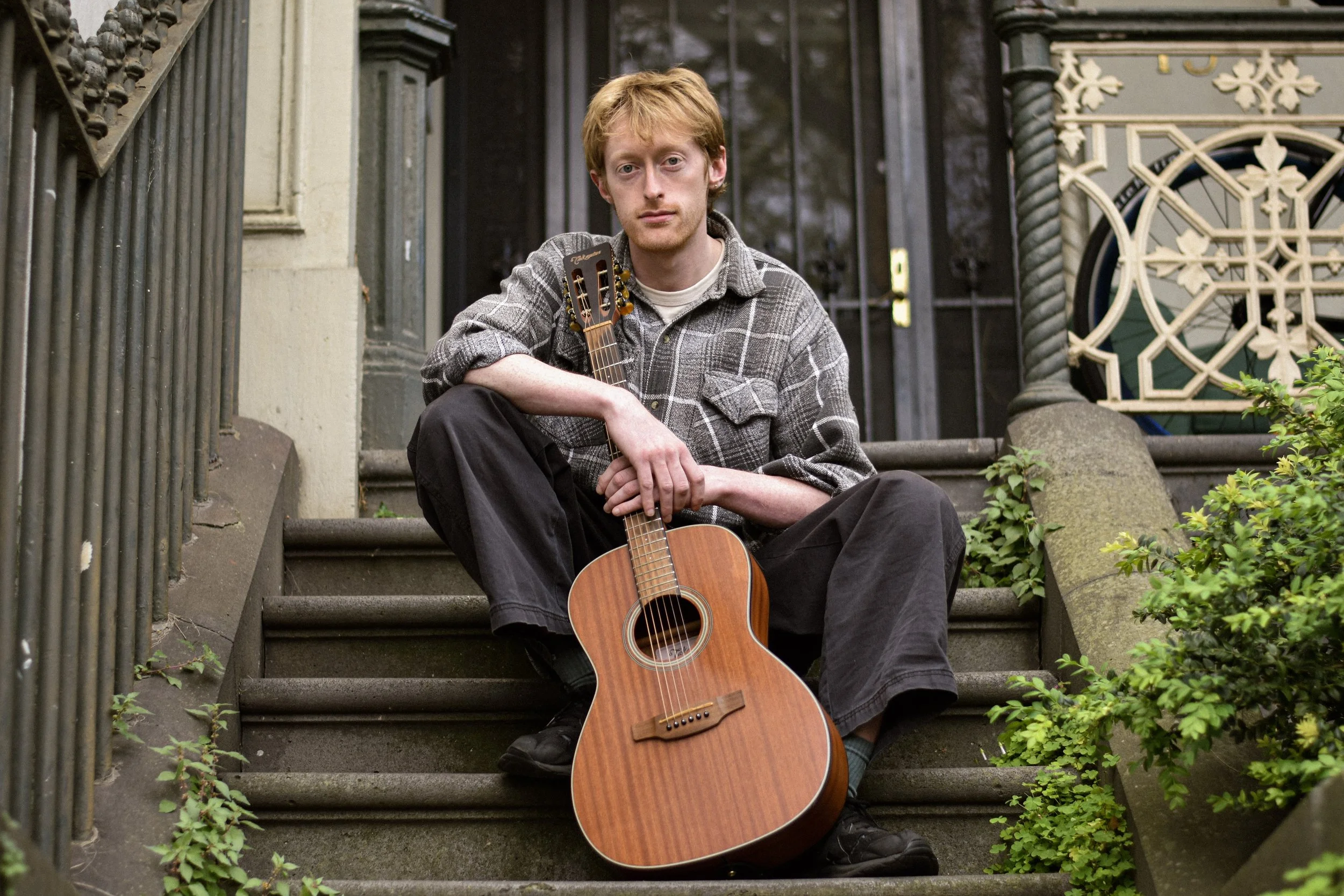
Joshua Rognoni, Image taken by Eadiella
Folk artist Joshua Rognoni released his new, debut acoustic-folk album, “twenty-five in the woods”, yesterday. A very stripped-back, raw and honest emotional reflection, “twenty-five in the woods” takes listeners on a journey of grief through Joshua’s reflection of his time turning 25, discovering clarity and hope towards the end. This album was heavily inspired by the work of classic folk artists, such as early Bob Dylan, Bon Iver and Nick Drake, giving it a unique, purely acoustic sound in the Melbourne folk scene as well as showcasing Joshua Rognoni’s clear talent as an artist and passion for music. There is also an upcoming accompanying Album Release gig. Audiences can expect a very cozy and intimate gig this Sunday, 30th of November, at Creatures of Habit, Fitzroy, from 4pm-7pm, supported by other very talented indie-folk artists/musicians Letíca Keane and Jimmy Smyth. Be sure to get your tickets now so you don’t miss out on what will no doubt, be a beautiful folk-focused gig. Read on to hear more, from Joshua Rognoni, about the process of putting together “twenty-five in the woods”, the stories behind it and who Joshua Rognoni is as an artist overall.
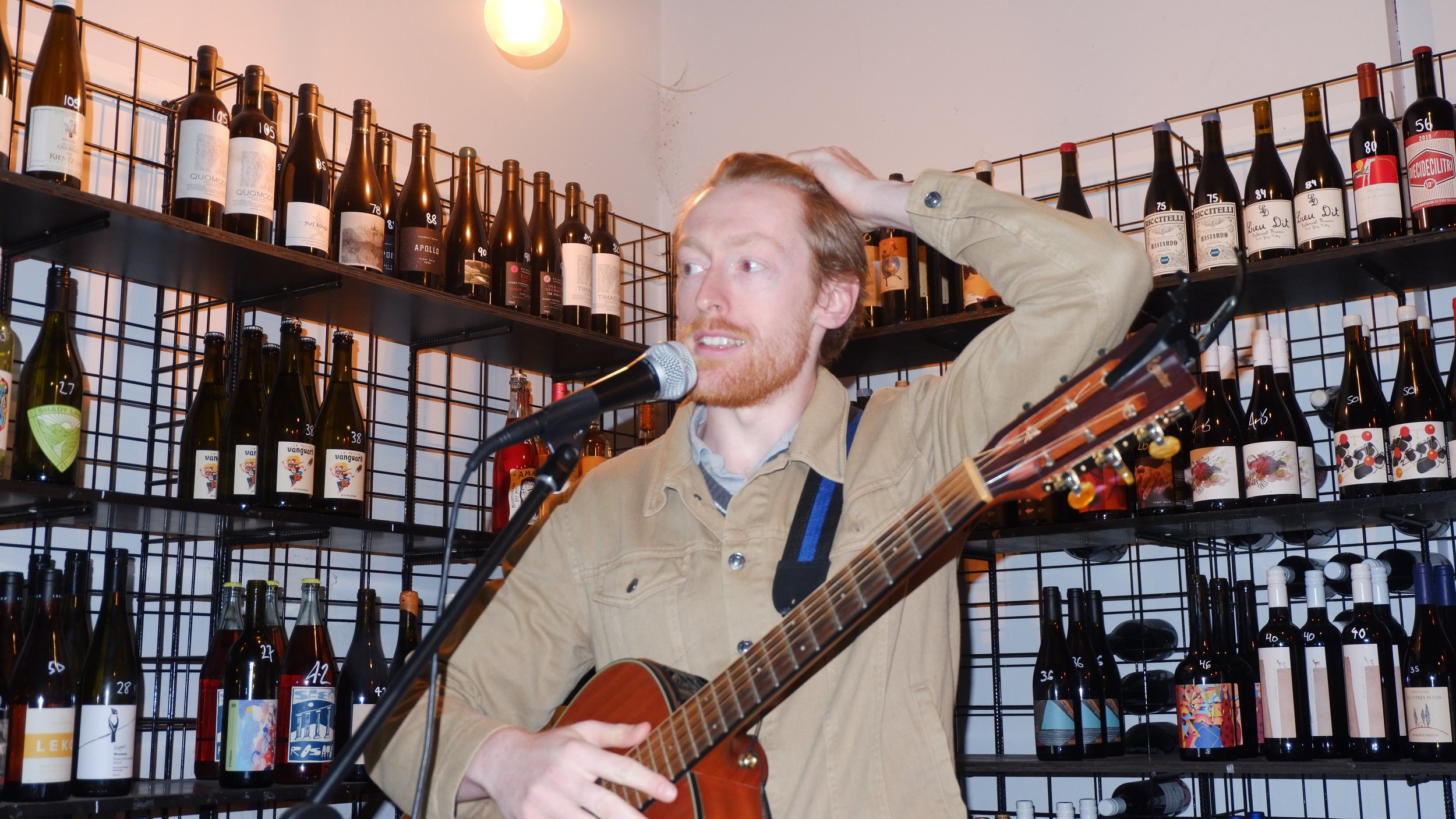
Joshua Rognoni live performance, Image taken by @iamzyra
What inspired you to begin songwriting?
Joshua Rognoni: Well, I’ve always written poems, and rhymes, [and] when I was in high school, I was really into rap. Me and my mates would write rap battles against each other; it was very silly. Then, I remember in year 12, there was this motivational speaker who came in. They got us all to do this exercise where we write our goal on a whiteboard, a goal that you would never tell anyone [that] you're really embarrassed about. [The idea was] just write it on the whiteboard and no one's gonna look, and at the end, you're gonna see all these goals [and] no one will know who's whose.
So, I wrote: “to write a song by the end of the year”. I didn't really think about it for the rest of the year, [until] I just [ended up] randomly writing a song. I was like, Oh. My. God. That summer, I ended up writing [around] 12 songs. It was just, for some reason, the way that the emotional part of me, like, the soul, tends to want to express itself.
Was there a reason for exploring specifically music as your creative outlet?
Joshua Rognoni: I think it's just when left to my own devices, completely separate from any influence, that's just how it comes out. *Acting is so social, and half of the reason you do it is 'cause when you're in school, you do a musical and you love the feeling of being with all the people. It was something I loved, it's very fun being part of an ensemble. But, I think when it comes to what I want to express, it just seems to be music every time.
Do you still find that community in music?
Joshua Rognoni: Yeah, I have now.
I started going to open mics twice a week, and started going to gigs and being part of the music community. It used to be such a, just in the bedroom, so [seclusive]. The moment I opened it out [and] shared, it's so much better.
The cool thing about being friends with other musicians is [that] they've got really interesting little gems of feedback or thoughts to help shape something. So, with my album, for example, it is 10 times better just 'cause I shared it with a couple of musicians, and they were able to give a bit of feedback. Just enough for me to not feel shit about it but go back and reshape it.
It's very community oriented, the Melbourne music scene, I think.
Joshua Rognoni: I think that's the answer. I feel like, obviously, there's the world being itself right now. Everything gets a little chaotic sometimes, [and] sometimes I wonder if my music, in the wrong context, is boring. Someone would maybe be like; I want something with drums and harder. But I feel maybe what I'm bringing [is] a bit of peace, just to chill things out a little. And that's what community is as well.
Did you move to Melbourne for any specific reason?
Joshua Rognoni: I was pursuing music back in Brisbane, my name was “Jo$hua”, and I was making sort of more auto-tune, rap [music]. I was doing a lot of gigging, as well, at pubs and restaurants.
I ended up sort of burning out. I was at a point where I was really considering just being a high school teacher. But, I was like, wait a second, no, I wanna be an artist. I gotta really throw myself into it. So, I decided to move to Melbourne as sort of a launch, see where things go.
Why Melbourne?
Joshua Rognoni: It's like the holy grail.
I think Brisbane's got a really good music scene as well, but, I just always wanted to go to Melbourne originally. And being from Queensland, Melbourne was like this kind of, oh, what is Melbourne? I wanna find out, you know. Melbourne feels like it's all about being interesting and being interested in life.
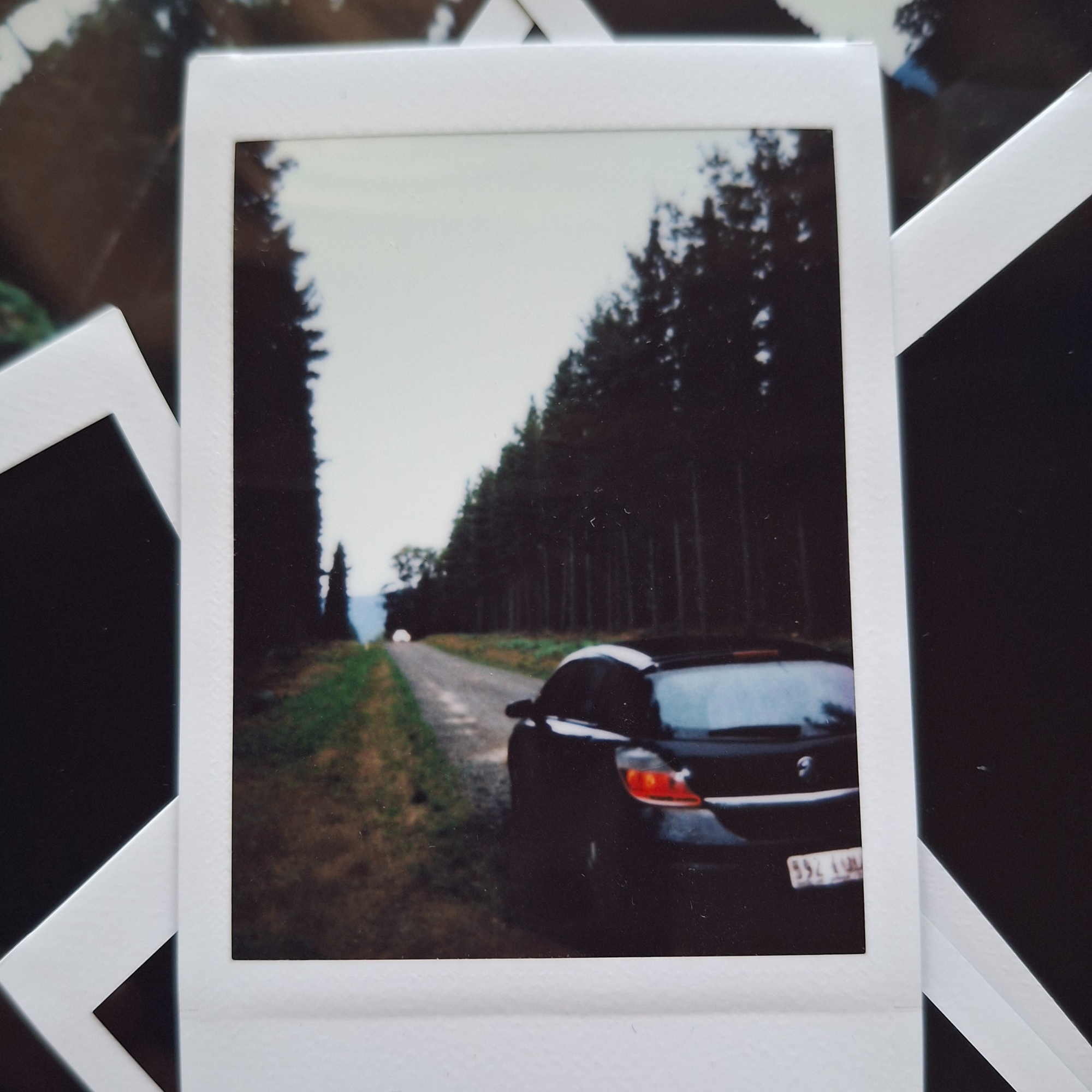
twenty-five in the woods Cover Art
Albums are really big projects to undertake. What was the thought process around releasing one?
Joshua Rognoni: I think 'cause it's special, and I wanted to.
It is a big undertaking. It took such a stupid amount of time to record it all properly, and then to rerecord [for some songs], and then to mess around [with it] a little bit, and even to promote it or put it out. [But], I [would] really like if someone gets something from it and feels something. That's the idea, 'cause the songs, like “where the grass is green” and “sunsets and cigarettes” can stand alone as a fun little package. But I wouldn't release “i hate you” just on its own; it wouldn't make sense.
Also, I think sometimes with releasing albums, or even just putting on a gig, it's the natural next step. Even if you're ready or not ready, you just have to be bold and go for it.
A lot of the themes in your album, “twenty-five in the woods”, featured love, and heartbreak, and experiences of life in your mid-twenties. So, are you writing songs to share your personal experiences?
Joshua Rognoni: It's funny 'cause, I dunno if it's wanting to, or it's just that's what comes out. I feel, love is the one thing that we all, especially in our mid-twenties or twenties in general, don't understand. We tend to really feel on top of everything, well organised, everything is working out in your life, and then someone comes into your life that you get feelings for and suddenly, everything's out the window. You don't even know how to talk anymore. So, I think because the stakes of it are so high [and] it's so energised, that's why you should write about love.
This album specifically, I had my first relationship down here in Melbourne [which] ended in a bit of a very abrupt breakup. Then I went solo camping and got my car stuck because I drove it, accidentally, down a four wheel drive track. Hot tip: you’re not supposed to do that.
There were just so many things that went wrong [and] I realised after that year, looking back, a lot of the songs I'd written were actually about that time; [that was] a turning point.
The album is acoustic and very stripped back. Was there a specific reason for this?
Joshua Rognoni: Multiple.
One of the reasons was, in the past, I relied so heavily on autotune and digital instruments, like how T-PAIN does it. So, people would always give feedback [saying], “why don't you just sing, don't autotune, just sing normal”. I wanted to challenge myself musically [and] I wanted to get better at singing.
Also, when you're trying to record something and produce it, 'cause I produce all my [songs] myself, acoustic takes are notoriously annoying; it's really hard to get 'em perfect. Personally, I wanted to challenge myself to be better.
All the songs lent themselves to that more intimate sort of emotional expression. I find a lot of the stuff I was listening to, like early Bon Iver, and early Bob Dylan, and even Nick Drake, [are] really stripped back often, just the guitar and singing. I [thought], can my songs hold up like that? I'd love to try, 'cause so much of folk today, you get the big drums, the harmonies; there's an industry that's sort of built the perfect sound. [Like], this is the best cake that you can get [and] this is the icing on it, but sometimes I want the honesty. So, I wanted to do [the stripped back style] in my songs.
So, there's a Christmas song on the album, “make it to christmas”. I was wondering if you classify it as a Christmas song?
Joshua Rognoni: So “make it to christmas” is [about] holding on because there are good things coming. It made sense coming after “i hate you”; it just picks [the album] back up. The holiday season has so much emotion in it for people [and] one of the things that I especially realised coming to Melbourne, was how much I love my family and some good friends back home. I’m sort of down here on a mission [and] I've got my community here for music, but there's a big part of me that misses home.
But it doesn't feel like a Christmas song, you know? Like, it's not a carol. Like Joni Mitchell? Have you ever listened to the “Blue” album? There's a song on that called “River” and her first opening line is “it's coming on Christmas”. But the whole thing is all about her emotions [during] a journey.
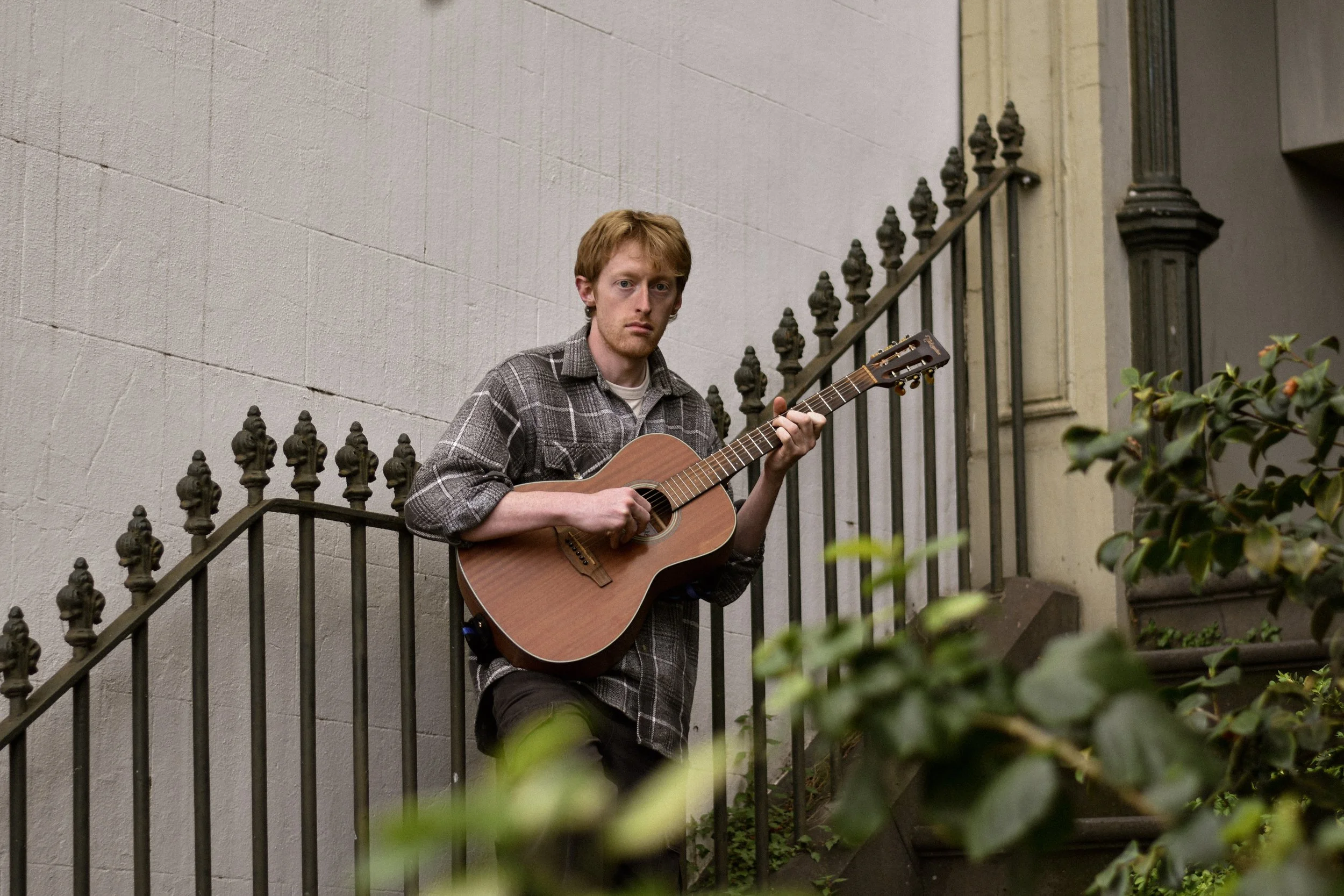
Joshua Rognoni, Image taken by Eadiella
What was the process of songwriting like for this album?
Joshua Rognoni: Sometimes the melody comes out just as is. You have kind of an idea of what the words should be [and] you [can] kind of fill it in. Sometimes, the lyrics are like a problem you have to think about for a month, because it's like, I like this, but this isn't working.
With “where the grass is green”, I made that song in, like, 20 minutes one night, then recorded it the next day, and it was pretty much as is. I just added the guitar part at the end. So, that one was very quick and I think [because] it just came from a place where I [felt] that’s just how it is. Whereas, “heaven” or like “endless nights and forever afters”, that was a different process, [having to think about the lyrics for a while].
I’ve also noticed in your lyrics there are often words or phrases you repeat a lot. Why have you chosen to construct a few of the songs this way?
Joshua Rognoni: That was interesting with the song “i hate you”. That [song] was much more just a vibe and not about the lyrics at all. I think I felt okay making it because there's this song by Dope Lemon called “Fuck Things Up”,. where it's sort of similar, the only lyrics are: “Sometimes you just fuck things up”. Sometimes, you just have to give yourself permission to be like, okay, someone might not like this song 'cause of this, but I don't care. I made it for a reason. If it's done well, it hopefully evokes a feeling in someone. Then the rest doesn't really matter.
You made a music video for “where the grass is green”. What was the inspiration for the video?
Joshua Rognoni: Honestly, the video was a bit of an experiment in a way.
That song is like if you wrote a love letter to your crush, but you knew it wasn't gonna work out. So, I wanted the idea of just a one-take looking straight at and talking directly to the camera [and] the idea of playing with the light came pretty organically. [Also], I remembered this trick from doing film at school [so] the video looks slowmo, but you’re still singing the lyrics at the normal speed. I [thought] that'd give this kind of weird effect, 'cause the vibe of the song has this very meditative, flowy feel.
What do you hope people get out of your album?
Joshua Rognoni: Sad… no, I'm kidding.
I hope that they relate to the songs and get maybe a sense of that weird, kind of grief or mourning or sadness, but [also] the thing that comes after it as well. It's like, sometimes you feel your emotions, and it actually makes you feel something. If you and feel it, you keep going, and you get to the other side of it. Which is why things are beautiful, you know? There's always a sad element to things, but we've got to accept and be okay with it, get to the light on the other side. So, that's what I hope [people take away from [twenty-five in the woods”].
Or people [can] feel whatever they want. They can listen to it [and] be like, I need to write mean comments on YouTube. Whatever they feel.
What do you hope people get out of you as an artist?
Joshua Rognoni: Honesty.
If I'm doing my job right, I’ll just continue to be true to myself. I have a lot of beliefs, values, [and] habits that I think are good for living life with other people and being kind. They're kind of, like, untested beliefs at this point because, well, I think that there are certain ways to do things, but I haven't been in that position where it needs to be tested. So, I hope that I get to play out the ideas that I believe in.
When I did my first gig in Brisbane, I got a bunch of visual artists, a bunch of support artists and some comedians; there were like 10 people on the [lineup]. We got a good amount of people to the [gig] and then did a profit share with everyone. A lot of people were like, why didn't you take like the majority of it? It's not about the money. I think in a sense, I've lived a lot of my life [believing] it's not really about the commercial things; honesty and kindness are more important. I was busking today, [and] someone drew a little picture of me and gave [it] to me. That's nicer than any [contribution] I’ve received, [and] any contribution someone gives you when your busking is awesome, but I'll remember that far more.
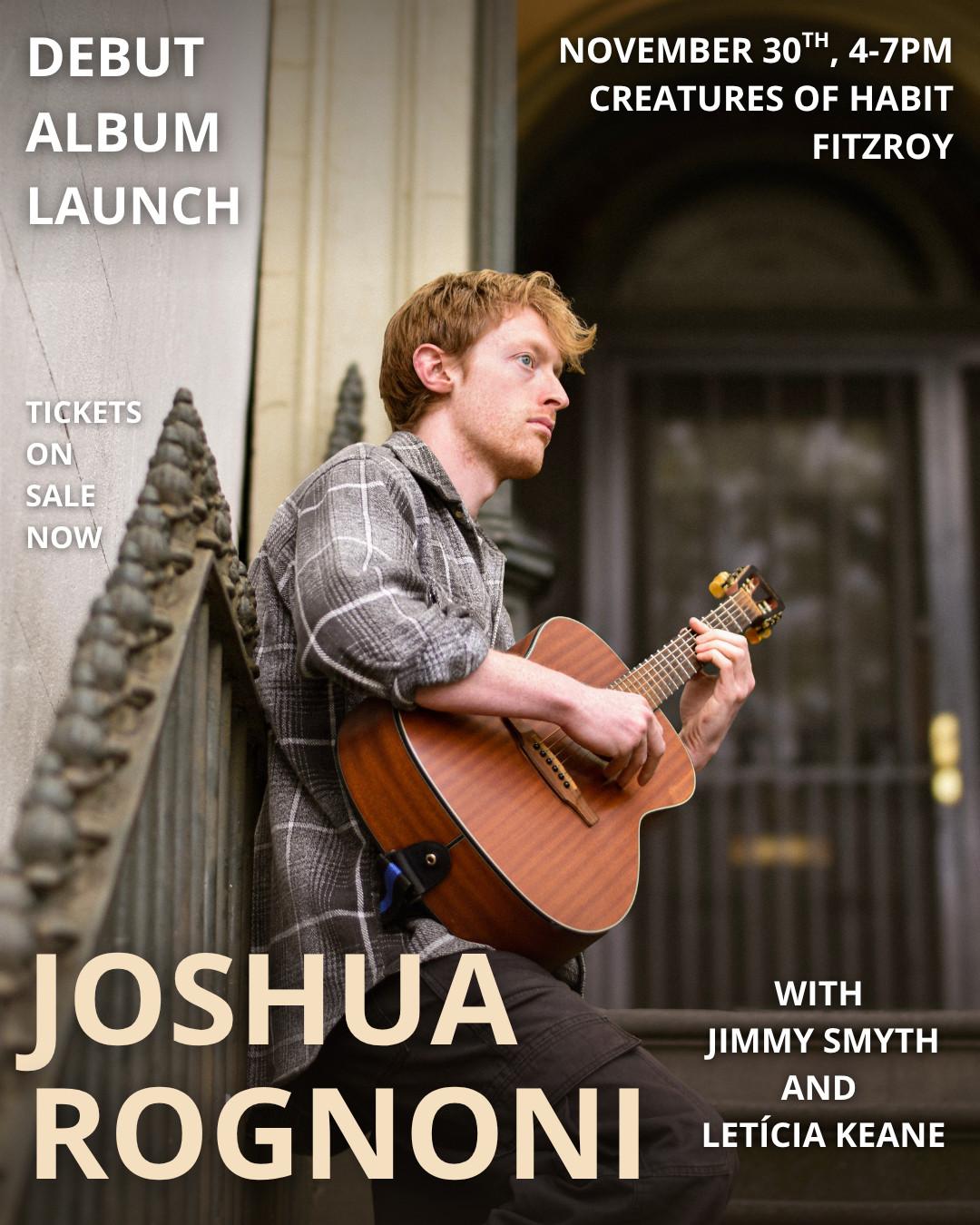
Reminder to get your tickets to Joshua Rognoni’s Album Release gig, this Sunday 30th of November, to listen to some of Joshua’s new album as well as the other talented indie-folk artists Letíca Keane and Jimmy Smyth. Also, be sure to purchase/stream the new album, “twenty-five in the woods”, to experience all that Joshua Rognoni talked about in the interview. You can do everything and more I just mentioned at the links below:
@joshua_rognoni - GIG TICKETS - YouTube - Spotify
SUPPORTS MENTIONED
